Maritime Carbon
Bunker & Fuel Planning
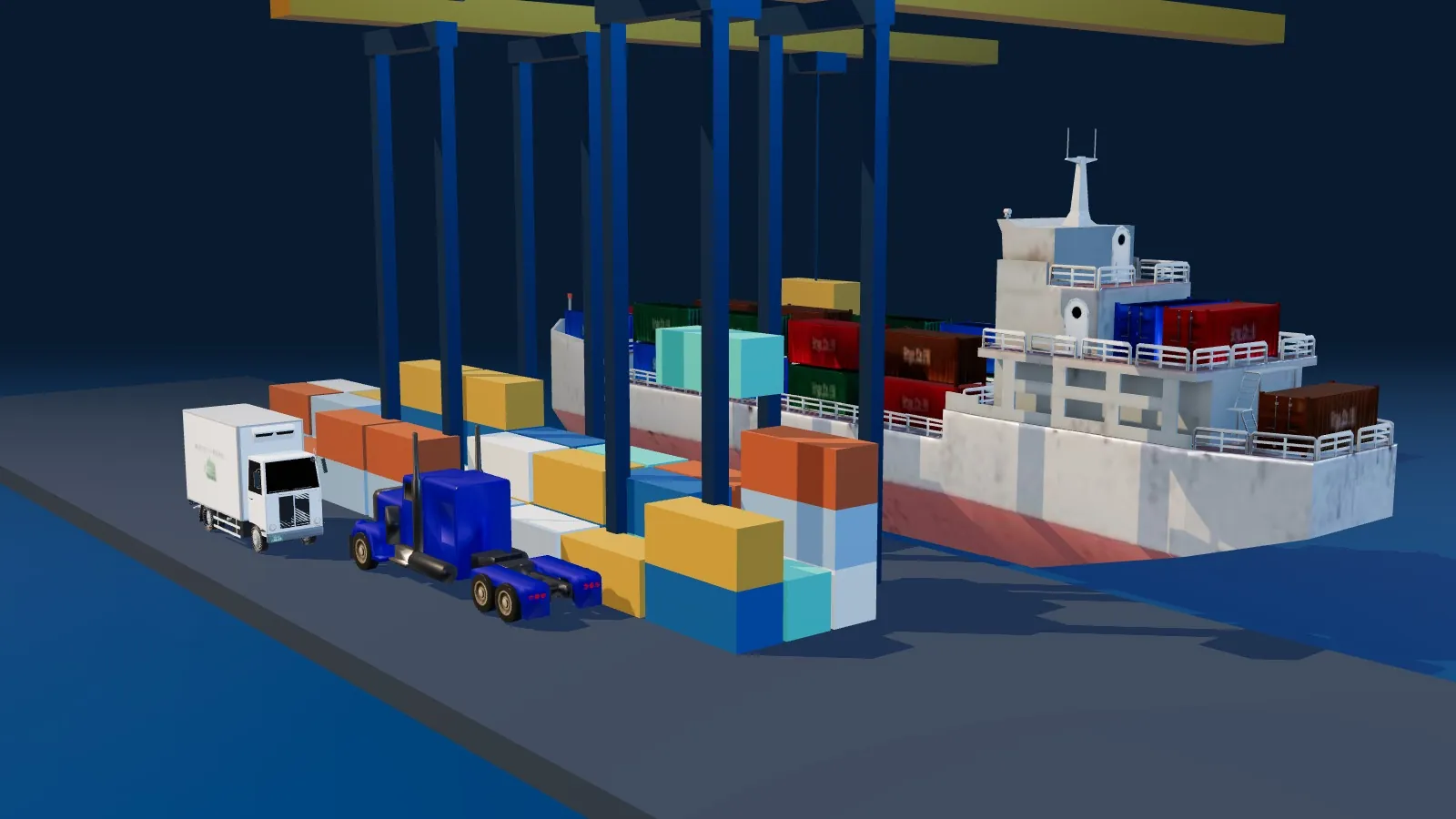
Bunkering used to be a procurement decision with a logistics constraint: buy where the price is lowest given the route, the tank capacity and the deviation cost. That is still most of it. What has changed is that a tonne of fuel now carries a carbon cost that depends on what the fuel is and where the ship is going, through EU ETS allowances on the combustion and through FuelEU on the greenhouse gas intensity of the energy.
Fuel choice for the longer term is harder still. Biofuels, LNG, methanol and ammonia each come with different capital cost, availability, intensity under the rules and uncertainty about where each pathway is heading. We assess those pathways without a stake in any of them, which in a market full of interested parties is most of the value.
How the work runs
Four phases, and what comes out of each.
2–3 weeks
Rebuild the bunkering decision
We reconstruct how bunkering decisions have been made from past stems, routes and prices, and identify where port choice, quantity and timing have left money behind. The analysis uses your own history rather than a market average.
Outputs
- Baseline of bunkering decisions by port, quantity and timing
- Gaps between what was bought and what the economics favoured
- Data required for a repeatable planning model
2–3 weeks
Price fuel through the carbon rules
Each candidate fuel is priced at the pump, then through allowance cost on combustion and through its effect on the FuelEU balance. The result is a landed carbon-inclusive cost per unit of energy, by trade, which is what the choice should actually be compared on.
Outputs
- Carbon-inclusive cost per unit of energy by fuel and trade
- FuelEU balance effect of blends and alternatives
- Sensitivity to fuel, allowance and penalty assumptions
3–4 weeks
Optimise where and how much
Port selection, quantity and timing are optimised across planned voyages under tank, deviation and availability constraints, with the carbon terms included. The output is a planning model the bunker desk runs, not a one-off recommendation.
Outputs
- Bunker planning model across ports and voyages
- Quantity and timing rules by trade
- Handover to the bunker desk with documentation
2–3 weeks
Assess fuel pathways soberly
For fleet renewal and retrofit decisions, fuel pathways are compared on total cost under scenarios for fuel price, availability, regulation and carbon price. We are explicit about what is known and what is a bet, and flag decisions that commit a ship to a pathway for its working life.
Outputs
- Pathway comparison under explicit scenarios
- Decisions with long lock-in identified
- Questions to put to fuel and engine suppliers
What good looks like
The ranges we design toward.
3 prices
On every tonne
Pump price, allowance cost and FuelEU effect, each on its own calendar. A decision on the first alone is incomplete.
Life of ship
Pathway lock-in
Engine and tank choices commit a ship to a fuel family for most of its working life, which is why those decisions deserve scenarios rather than a single forecast.
0
Broker or supplier fees
We sell no fuel and take nothing from anyone who does.
Deliverables
What you are left holding.
- 01Baseline of past bunkering decisions against their economics
- 02Carbon-inclusive fuel cost by trade, including FuelEU and ETS effects
- 03Bunker planning model run by your bunker desk
- 04Fuel pathway assessment for renewal and retrofit decisions
- 05Documentation and training for the team that inherits it
What an engagement looks like
A representative shape.
Illustrative. This is the shape of work in maritime carbon, not an account of a specific client. We do not publish named results, and we would be wary of a firm that publishes them without the client in the room.
12 weeks
- 01Situation
A dry bulk operator with part of its fleet trading into Europe had its first EU ETS surrender approaching and no view of its FuelEU balance. Speed instructions were set commercially per voyage, bunkering was decided by price alone, and the CII rating for each ship was discovered after year end.
- 02What we did
Fitted a speed and fuel model for each ship from its own reports, built one emissions dataset serving MRV, ETS, FuelEU and CII from the same fuel records, and priced allowance and FuelEU cost into the voyage evaluation used for fixtures, with a rolling CII forecast per ship.
- 03Where it landed
Carbon cost appeared in the voyage estimate before fixing rather than in the accounts afterwards. Two ships heading for a D rating were identified early enough to act within the year. Allowance purchasing moved from a single deadline purchase to a schedule under a written mandate, and the models were handed to the operator's own team.
Where this connects
Rarely a self-contained problem.
Strategic Sourcing
Bunkering is category procurement with a logistics constraint. The should-cost and supplier analysis we use on other categories applies directly.
Carbon TradingDecarbonisation
Fuel pathway choice is the largest abatement decision a fleet makes, and belongs on a cost-per-tonne curve alongside the operational measures.
Questions
The ones we get asked.
Do you buy bunkers for us?
No. We build the planning model and the decision rules; your bunker desk or broker executes. We have no relationship with any supplier or broker and take no fee on any stem.
Are biofuel blends worth it?
Sometimes, and it depends on the trade, the blend, its certification and the prices on the day. Under FuelEU a blend can improve a ship's balance and, if the ship is in a pool, the pool's. Whether that beats paying more for compliance another way is a calculation, and we do it with your numbers rather than with a supplier's.
Which alternative fuel will win?
We do not know, and nobody does with the confidence often claimed. What we can do is show which decisions are robust across plausible outcomes, which depend heavily on one pathway, and which can be deferred without closing options. That is usually more useful than a prediction.
Insights
Related reading.
What CBAM actually asks of an exporter
It is usually described as a carbon tax at the EU border. For a producer it behaves much more like an evidence problem, and the exporters paying most are frequently the ones emitting least.
Pricing supply chain resilience
Every disruption produces a resolution to become more resilient. Almost every resolution dies quietly at the next budget cycle, for a reason that is entirely predictable.
Closely related
More on Maritime Carbon →Voyage & Speed Optimisation
Speed, routing and port timing set against fuel, charter terms and carbon cost together, on a fuel model fitted to your own ships.
Maritime CarbonFuelEU Compliance & Pooling
Each ship's FuelEU balance forecast, and the cheapest route to compliance across fuel choice, banking, borrowing and pooling, chosen on the numbers.
Start a conversation
Talk to us about bunker & fuel planning.
Most useful first conversations are thirty minutes and involve no proposal. Describe the problem you are looking at and we will tell you honestly whether it is one we can help with.
Or write directly to hello@shyenova.com